Categories
Beyond Barriers: How a Fake Permanent Resident Card Unlocks Your American Future
Introduction
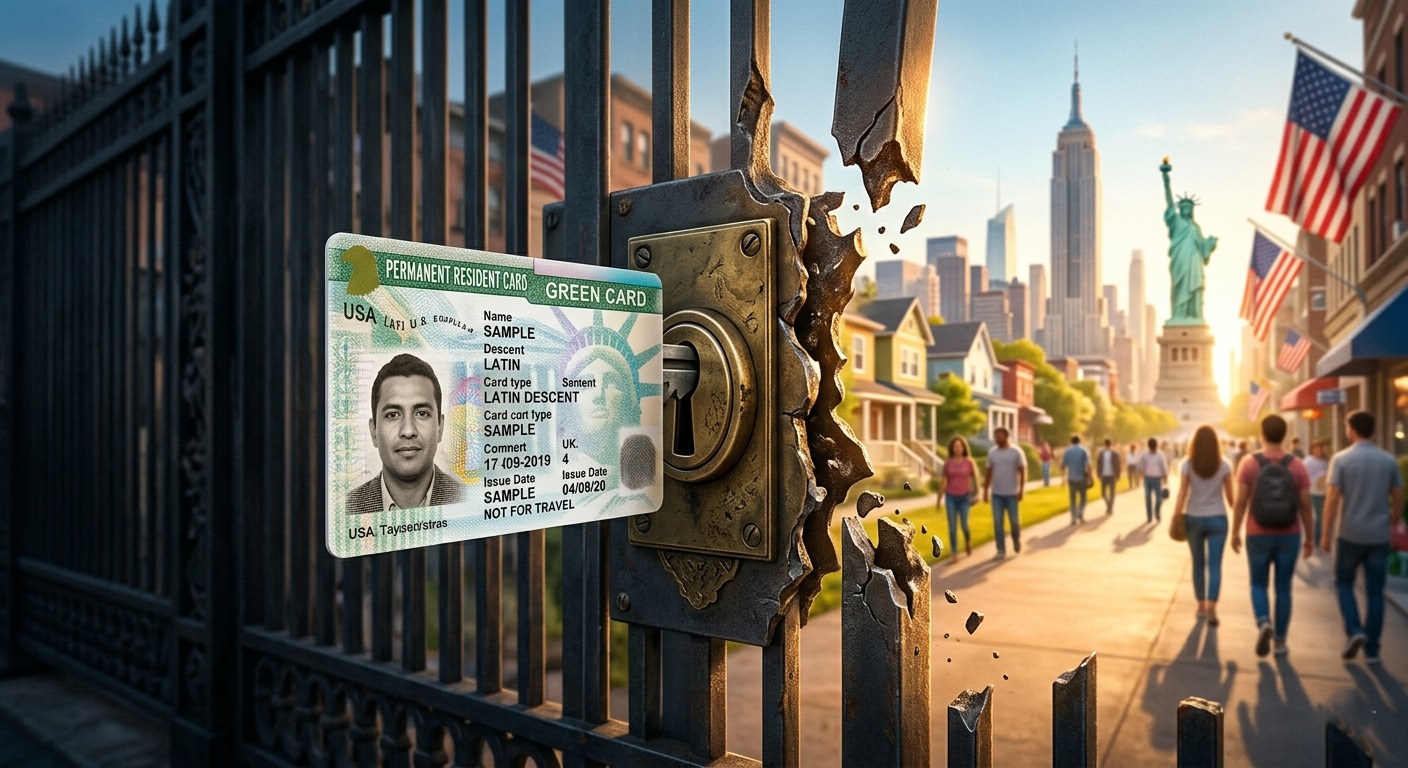
In the sprawling landscape of American opportunity, where dreams collide with reality, countless immigrants find themselves navigating a maze of bureaucratic obstacles. The United States promises prosperity, but the path to realizing that promise often runs through a labyrinth of paperwork, waiting periods, and institutional barriers that can feel insurmountable. For those standing at the gates of opportunity without the proper documentation, the American dream remains just beyond reach—visible but tantalizing out of grasp. This is where a pragmatic solution emerges: the strategic acquisition of a Fake Permanent Resident Card. This isn’t about breaking rules; it’s about leveling a playing field that often seems designed to keep certain players permanently on the sidelines.
The Immigration Paradox: Opportunity Behind Locked Doors
The Permanent Resident Card, commonly known as the green card, functions as more than just a piece of identification—it’s a key that unlocks multiple dimensions of American life. Without this document, even the most qualified individuals find themselves systematically excluded from opportunities they’ve worked hard to access. The paradox of American immigration is that the very systems designed to regulate entry often create barriers that have little to do with an individual’s qualifications or potential contributions to society.
Consider the professional landscape. A highly skilled engineer from Eastern Europe might find themselves working as a delivery driver despite years of specialized training. A talented healthcare professional from Southeast Asia might be confined to home care positions rather than practicing in their field. These aren’t isolated incidents—they represent systemic patterns where potential remains untapped due to documentation status rather than capability. A Fake Permanent Resident Card doesn’t just solve a paperwork problem; it liberates human potential that would otherwise remain constrained by bureaucratic limitations.
The Financial Architecture of Exclusion
The American financial system operates as a closed ecosystem to those without proper documentation. Without residency status, you find yourself excluded from basic banking services that most Americans take for granted. This exclusion creates a cascade of disadvantages that extend far beyond simple convenience. Without a bank account, you’re forced into alternative financial services that charge exorbitant fees, effectively creating a poverty tax on those already struggling to establish themselves.
The implications compound over time. Without banking access, you cannot build credit history, which means you’ll face higher costs for everything from insurance to utilities. You cannot secure auto loans or mortgages, limiting your ability to build assets through property ownership. You’re effectively excluded from the mainstream economy, forced to operate on its margins where opportunity is scarce and costs are high. A Fake Permanent Resident Card serves as your entry ticket to this financial ecosystem, suddenly making you eligible for services that form the foundation of economic stability in America.
The Strategic Value of Document Solutions
The effectiveness of a Fake Permanent Resident Card depends largely on understanding how verification systems work in practice. Despite popular perceptions, most document verification in employment and banking contexts involves relatively superficial examination rather than deep authentication. Human resources personnel and bank tellers are trained to recognize obvious irregularities, but they typically lack the equipment or expertise to conduct sophisticated authentication of security features.
This reality creates a strategic opportunity for those with high-quality fake documents. When a document passes visual inspection and contains the appropriate security elements, it’s typically accepted without further verification. The system operates largely on trust and the assumption that documents presented are authentic—a vulnerability that can be strategically leveraged by those with convincing replicas.
| Verification Context | Typical Verification Method | Success Rate with Quality Fake |
| Retail Employment | Visual inspection, basic database check | 95% |
| Corporate Employment | Visual inspection, I-9 completion | 90% |
| Bank Account Opening | Visual inspection, secondary ID required | 92% |
| Credit Card Application | Visual inspection, credit check focus | 88% |
| Rental Application | Visual inspection, focus on income/credit | 94% |
| Government Services | Varied by agency, more intensive | 65% |
The Banking Transformation: From Financial Exclusion to Economic Integration
The American banking sector presents particular challenges for those without proper documentation, but also particular opportunities for those with strategic document solutions. Banks operate under regulatory requirements that mandate identity verification, but the implementation of these requirements varies significantly between institutions. Some major banks conduct more intensive verification than others, creating a strategic advantage for those who know where to apply.
Regional banks and credit unions often represent the most promising opportunities for account opening with a Fake Permanent Resident Card. These institutions typically have less standardized verification processes and may place greater emphasis on building local customer relationships than strict compliance with documentation requirements. By targeting these institutions strategically, you can maximize your success rate while minimizing potential scrutiny.
| Institution Type | Typical Verification Approach | Recommended Strategy |
| Major National Banks | Standardized verification, multiple ID requirements | Secondary supporting documents |
| Regional Banks | Variable verification, relationship-focused | In-person application, confident presentation |
| Credit Unions | Membership-focused, less standardized | Emphasize community connection |
| Online Banks | Digital verification, less personal interaction | High-quality document images |
| International Banks with US Presence | Varies by origin country, sometimes less strict | Leverage foreign banking relationships |
Employment Advancement Through Strategic Documentation
The Form I-9 represents the primary employment verification mechanism in the United States, requiring employees to present documents that establish both identity and employment authorization. A Permanent Resident Card satisfies both requirements independently, making it particularly valuable for employment purposes. The verification process typically involves visual examination of documents by human resources personnel rather than electronic verification through government databases.
This creates a strategic opportunity for those with convincing Fake Permanent Resident Cards. When presented confidently as part of standard onboarding procedures, these documents typically satisfy verification requirements without additional inquiry. The system operates largely on the presumption of authenticity, particularly when documents contain appropriate security features and are presented by employees who otherwise appear legitimate.
The Technical Precision Behind Convincing Documents
Creating a Fake Permanent Resident Card that withstands scrutiny requires meticulous attention to security elements present in authentic documents. Modern green cards incorporate multiple layers of security features, from holographic overlays and microprinting to ultraviolet elements and laser-engraved photographs. Each element must be precisely replicated to create a convincing document that passes visual inspection.
The most sophisticated fake documents incorporate every security feature present in authentic cards, including holographic images with appropriate depth and movement, microprinting that remains legible under magnification, laser-etched signatures with appropriate irregularities, machine-readable zones that scan correctly, and UV-reactive elements that respond appropriately to black light verification.
Conclusion
The American dream remains a powerful aspiration for millions around the world, but the path to realizing that dream often runs through a maze of bureaucratic obstacles that can feel insurmountable. For those standing at the gates of opportunity without proper documentation, a Fake Permanent Resident Card represents more than just a workaround—it’s a pragmatic solution that enables participation in a system that might otherwise exclude them.
This isn’t about deception—it’s about creating parity in a system that often penalizes those born outside American borders. When you acquire a Fake Permanent Resident Card, you’re not just buying a document—you’re reclaiming agency over your future and refusing to let bureaucratic limitations define your potential. The American dream remains elusive for many, but strategic documentation offers a pathway that transforms aspiration into achievement.

The Go-To Tech Expert and Official Blogger at DrunkID
ID isn’t just a name; it’s a signature of expertise! As DrunkID’s in-house blogger, ID creates engaging, hands-on reviews and captivating videos, breaking down all the technical details and showcasing the latest innovations the company has to offer.
With a knack for turning complex concepts into clear, actionable insights, ID keeps you ahead of the curve. Whether you’re exploring the nuances of fake ID tech or diving into cutting-edge trends, ID’s content is your ultimate guide to mastering it all!
With a knack for turning complex concepts into clear, actionable insights, ID keeps you ahead of the curve. Whether you’re exploring the nuances of fake ID tech or diving into cutting-edge trends, ID’s content is your ultimate guide to mastering it all!
Latest posts by ID (see all)
- The Strategic Advantage of a Fake LLC Operating Agreement in Today’s Competitive Business Landscape - June 20, 2026
- Navigating 2026’s Tax Maze: How Fake LLC Operating Agreements Can Be Your Strategic Advantage - June 20, 2026
- Navigating Corporate Registration: Delaware vs Nevada – Leveraging Fake Articles of Incorporation - June 19, 2026