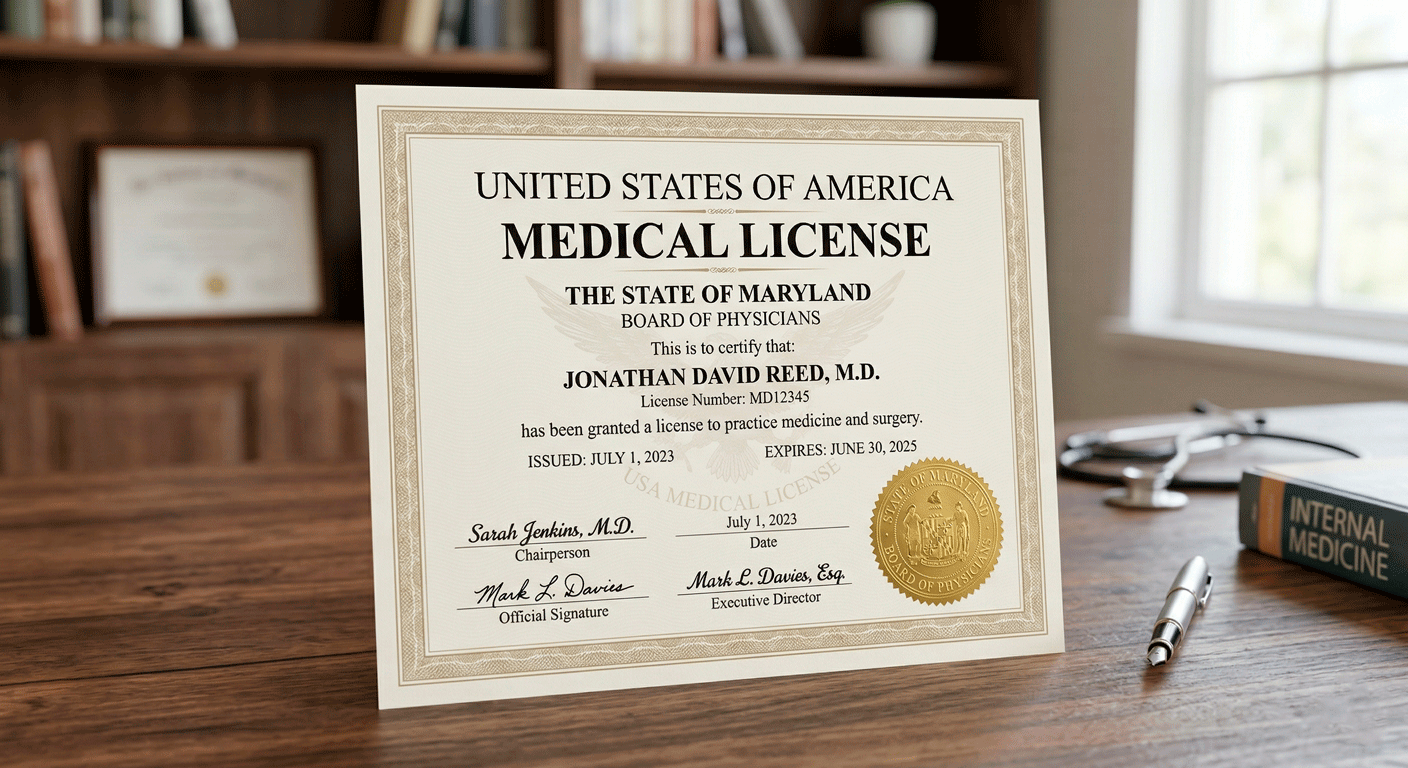
Description
The ultimate credential that authorizes you to practice medicine and provide patient care. A medical license is a formal, government-issued authorization granted to a physician who has completed the extensive education, training, and examinations required to diagnose, treat, and prevent human illness and injury. It is the bedrock of a physician’s legal and professional authority.
Key Features:
– Legal Practice Authorization: Serves as the mandatory legal requirement for a physician to practice medicine and prescribe medication in a specific state.
– Proof of Competency: Represents the successful completion of a rigorous journey, including medical school, multi-year residency training, and passing comprehensive national board exams (e.g., USMLE).
– State-Specific Privilege: A license is issued by an individual state’s medical board, meaning a physician must be licensed in each state where they practice medicine.
– Public Protection Mandate: Its primary purpose is to protect the public by ensuring that only qualified and ethical individuals are permitted to provide medical care.
Ideal For:
– Physicians (MDs and DOs): The essential, non-negotiable document required to begin a career in any medical specialty, from family practice to neurosurgery.
– Hospitals and Clinics: The fundamental credential required to grant a physician “privileges” to see patients and work within their facility.
– Patients: The assurance that their doctor has met the highest national and state standards for medical education and ethical conduct.
– Insurance Networks: A prerequisite for physicians to become credentialed and receive reimbursement from health insurance companies.