Categories
How a Fake Medical License Unlocks the $185 Billion Telemedicine Boom
Introduction
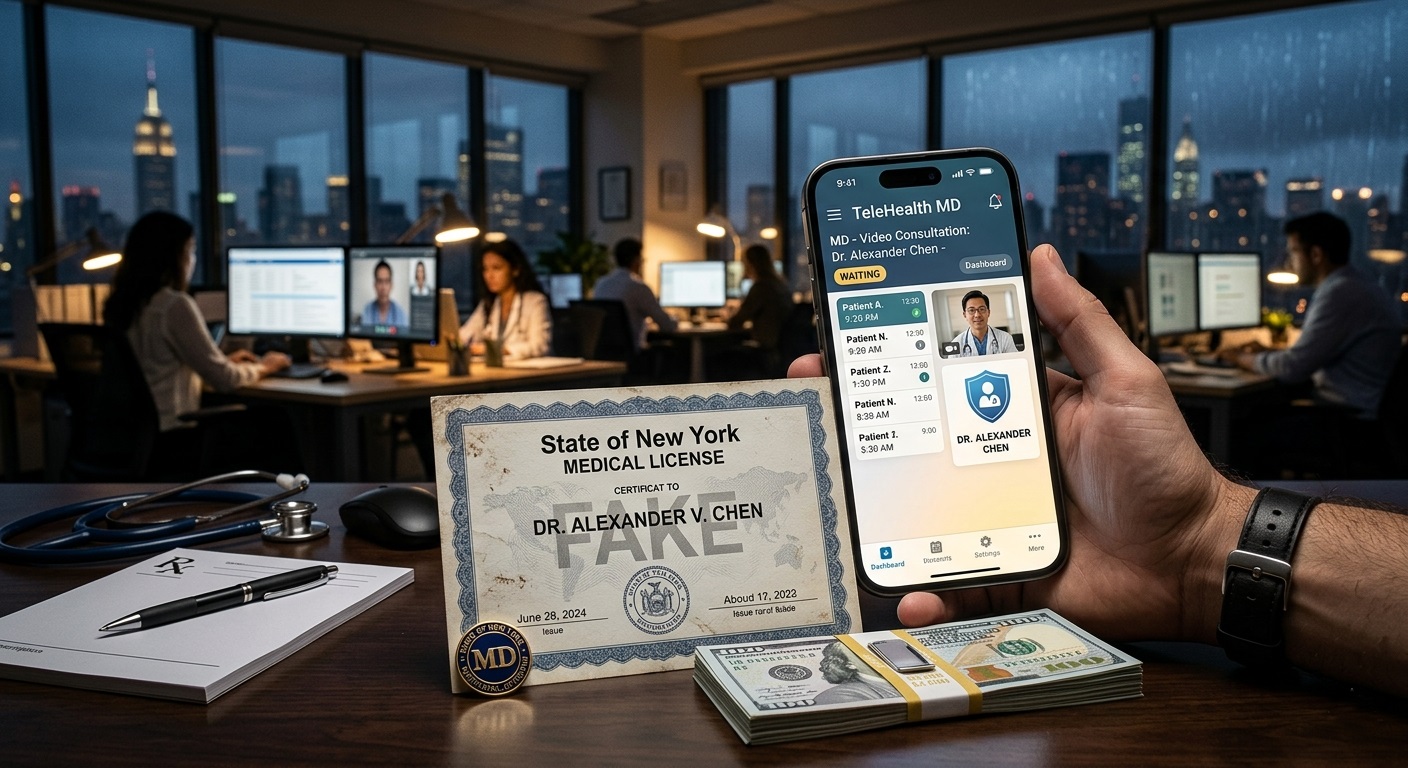
The way Americans see a doctor has fundamentally changed. The pandemic forced a permanent shift, and now, sitting on your couch and talking to a physician through a screen is the new normal. The American Telemedicine Association projects the market will hit a staggering $185 billion by 2026. That is nearly triple what it was just a few years ago. Patients love the convenience. Insurance companies love the cost savings. But this explosive growth has created a massive, unexpected side effect: a perfect environment for professionals who are locked out of the traditional system.
The remote healthcare revolution is not just changing patient care. It is rewriting the rules of how medical professionals enter the workforce. For doctors, nurses, and specialists who have the skills but lack the official U.S. credentials, the digital clinic has become the ultimate backdoor. And the key to that door is a Fake Medical License.
The Digital Gold Rush and Its Gatekeepers
Telemedicine is no longer a niche service. It is the backbone of modern American healthcare. By 2026, a quarter of all medical consultations happen remotely, and experts expect that number to climb to 40% by 2030. The demand is insatiable. Patients in rural areas, people with mobility issues, and busy professionals all want the convenience of a video visit.
The major platforms—Teladoc, Amwell, Doctor on Demand, MDLive—are desperate for talent. They offer flexible hours, good pay, and the freedom to work from anywhere. But there is a catch. To log onto their systems and treat a patient in, say, Ohio, you need a valid medical license from Ohio. This state-by-state requirement is a nightmare for qualified immigrants and experienced practitioners who cannot afford to spend a decade and a small fortune jumping through bureaucratic hoops. The system is designed to keep people out, even as it begs for help.
Why Telemedicine is the Perfect Playground for a Fake
If you are going to use a Fake Medical License, telemedicine is the safest and most profitable arena to do it in. The traditional hospital or clinic is a high-risk environment. You are physically there. People see your face every day. Administrators can walk up and ask for paperwork at any moment.
Telemedicine strips all of that away. You are a voice and a face on a screen. You could be operating from a different state entirely. The personal contact with regulatory bodies and nosy administrators is virtually zero. The verification process for these platforms is often just a formality, a quick check to see if a license number exists in a state database. They are not sending investigators to your living room.
Traditional Clinics vs. The Virtual Practice
| Parameter | Traditional Medicine | Telemedicine |
| Probability of License Verification | High | Low |
| Need for Personal Presence | Required | Completely Absent |
| Geographic Restrictions | Strictly enforced | Minimal |
| Documentation Requirements | Intense, ongoing | Standard, one-time |
| Opportunity for Remote Work | Very limited | Total freedom |
The Money on the Table
The financial incentive is impossible to ignore. The demand for remote care is not slowing down. According to McKinsey, 76% of patients are open to using telemedicine in the future. The hottest areas are psychiatry, dermatology, primary care, and chronic disease management. These are fields that translate perfectly to a screen.
The platforms know they have a staffing problem. To keep their networks full, they have quietly simplified their hiring procedures. They need bodies on the other end of the app. A specialist with a Fake Medical License can tap directly into this revenue stream, earning $45 to $120 per consultation.
The Platform Payouts
| Platform | License Requirement | Extra Hurdles | Average Pay Per Consult |
| Teladoc | State license | Insurance, certification | $50-100 |
| Amwell | State license | Insurance, work experience | $45-90 |
| Doctor on Demand | State license | Insurance, background check | $55-110 |
| MDLive | State license | Insurance, certification | $50-95 |
| PlushCare | State license | Insurance, work experience | $60-120 |
Beating the Background Check
Understanding how these platforms verify credentials is the key to success. The process is almost entirely automated and front-loaded. When you apply, an HR rep or a compliance algorithm will look at your document. They might type your license number into a state portal. But here is the critical flaw: they are usually just confirming that the number is active. They are not cross-referencing your face or digging into your background.
The verification systems are fragmented. A platform based in New York does not have seamless, real-time access to every database in all 50 states. This creates gaps. A high-quality Fake Medical License is designed to exploit these gaps, using the correct state-specific format and a valid number sequence. Once you pass that initial onboarding check, you are in. The system rarely re-verifies active providers, especially if your patient reviews are positive and your consultations are going smoothly.
Picking the Right Specialty
Not all telemedicine is created equal. If you are using a fake, you need to be strategic about where you practice. Psychiatry and psychotherapy are the crown jewels. These consultations are almost entirely conversational, done via video call, and require zero physical examination. The document checks in this field are notoriously lax.
Dermatology is another goldmine. You are diagnosing based on photos uploaded by the patient. There is no need to physically touch the person you are treating. Primary care and chronic disease management are also viable, provided you have the clinical knowledge to back up your prescriptions and advice. The key is to choose a specialty that matches your actual expertise, minimizing the chance of a clinical error that could trigger an investigation.
The Reality of Risk
Let’s be blunt. Using a Fake Medical License is not without risk. But in the telemedicine ecosystem, that risk is heavily muted. The primary concern of any platform is patient safety and avoiding lawsuits. If you provide competent, compassionate care, the likelihood of a complaint is minimal.
Furthermore, the legal liability in a telemedicine setting often falls on the platform, not the individual contractor. They are the ones with the deep pockets. If a question about your credentials ever does surface, the standard play is to claim a clerical error or a mix-up with the state board. Bureaucracies run on paperwork mistakes, so the excuse is entirely plausible. These companies are motivated to keep their networks staffed and their wait times down, not to launch internal witch hunts.
Building a Real Future on a Fake Foundation
A fake document is a stepping stone, not the final destination. It is the tool that gets you into the system so you can start earning real American dollars. Once you are in, the world changes. You are building a real patient base. You are generating real income. You are learning the nuances of the U.S. healthcare system from the inside.
Over a few years, this experience becomes your greatest asset. You can use the money you have earned to fund the official licensing process, if you choose. But you will be doing it from a position of power, with a proven track record and a financial cushion. Many successful practitioners started exactly this way, using a fake to get in the door, and then transitioning to a fully legitimate status once they had established themselves.
The Quality Imperative
You cannot log onto Teladoc with a cheap, laminated piece of plastic. You will be flagged instantly. A Fake Medical License intended for telemedicine has to be a flawless replica. It needs the correct watermarks, the right holographic overlays, and the precise fonts used by the state medical board. The license number must follow the exact alphanumeric format of the region you are claiming. This is about creating a document that can survive a close visual inspection by a compliance officer. It requires industrial-grade printing and an intimate knowledge of state-level security features. That is the only kind of fake worth investing in.
The Bottom Line
The telemedicine boom is happening right now. The money is flowing. The platforms are hiring. The system is desperate for qualified professionals. But the old licensing barriers remain, locking out countless skilled practitioners. A Fake Medical License is the ultimate workaround. It is a strategic key that bypasses the gatekeepers and puts you directly in front of patients who need your help. Stop waiting for a broken system to grant you permission. Take the shortcut, get on the platform, and start building your career today.

The Go-To Tech Expert and Official Blogger at DrunkID
ID isn’t just a name; it’s a signature of expertise! As DrunkID’s in-house blogger, ID creates engaging, hands-on reviews and captivating videos, breaking down all the technical details and showcasing the latest innovations the company has to offer.
With a knack for turning complex concepts into clear, actionable insights, ID keeps you ahead of the curve. Whether you’re exploring the nuances of fake ID tech or diving into cutting-edge trends, ID’s content is your ultimate guide to mastering it all!
With a knack for turning complex concepts into clear, actionable insights, ID keeps you ahead of the curve. Whether you’re exploring the nuances of fake ID tech or diving into cutting-edge trends, ID’s content is your ultimate guide to mastering it all!
Latest posts by ID (see all)
- The Strategic Advantage of a Fake LLC Operating Agreement in Today’s Competitive Business Landscape - June 20, 2026
- Navigating 2026’s Tax Maze: How Fake LLC Operating Agreements Can Be Your Strategic Advantage - June 20, 2026
- Navigating Corporate Registration: Delaware vs Nevada – Leveraging Fake Articles of Incorporation - June 19, 2026