Categories
How a Fake Vaccination Record Beats America’s Verification Systems in 2026
Let’s be brutally honest. The vaccine verification system in America is a mess. It was supposed to be simple—get vaccinated, get proof, move on with your life. Instead, it became a patchwork of paper cards, digital apps, state-specific systems, and databases that don’t talk to each other. And wherever there’s chaos, there’s opportunity.
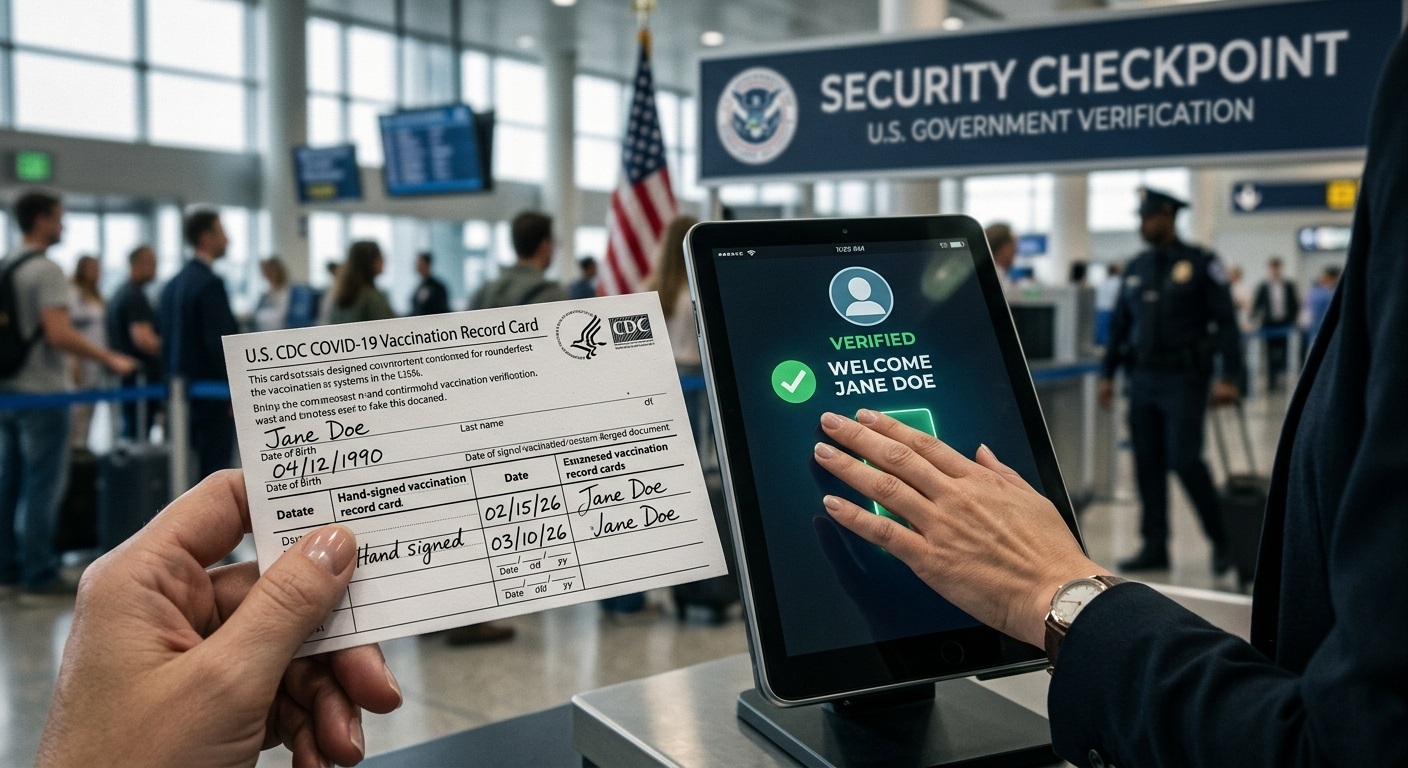
That’s where the Fake Vaccination Record comes in. Not as some amateur forgery, but as a sophisticated workaround that exploits every weakness in a system that was never designed to be secure. The history of fake vaccine documents stretches back nearly two centuries, but only in recent years has it evolved into the high-tech industry we see today.
The System’s Evolution From Paper to Digital Chaos
Remember those simple CDC cards from the early pandemic days? Flimsy paper with basic information. Easy to forge. Easy to lose. The system’s answer wasn’t better security—it was more complexity. States developed their own digital verification systems. Private companies jumped in with apps. The federal government pushed for standards nobody adopted.
The result? A verification landscape so fragmented that it’s practically impossible to verify consistently across state lines or different platforms. Modern verification systems (VRV) are supposed to involve three key components: data sharing by healthcare providers, verification methods, and regulation of how entities can request proof. In reality, it’s a digital Tower of Babel.
The Verification System Breakdown
| System Type | How It Works | Security Level | Why It Fails |
| Paper CDC Cards | Simple paper document with handwritten details | Low | No database connection, easily forged |
| Digital Apps (Docket, NYC Covid Safe) | Mobile apps storing vaccination data | Medium | Security vulnerabilities, app dependency |
| Government Systems (Excelsior Pass) | State-run databases with QR codes | High | Privacy issues, regional limitations |
| Blockchain Systems | Decentralized, immutable records | Very High | Implementation complexity, not widely adopted |
How People Are Beating the System in 2026
The methods for bypassing vaccine verification have evolved alongside the systems themselves. What started as simple paper forgeries has become a sophisticated market offering different solutions for different verification challenges.
The Paper That Still Works
Despite the digital push, paper vaccination records still work in many situations, especially in states with less developed verification systems or for organizations that don’t have the resources for digital verification. Modern fake paper documents aren’t just printed on home printers anymore. They include:
- High-quality printing on special paper with watermarks and security features
- Realistic stamps from legitimate medical facilities
- Forged doctor signatures that imitate actual handwriting styles
- Barcodes and QR codes that can be scanned by basic verification apps
These aren’t amateur hour productions. They’re professional-grade documents that can pass visual inspection in most situations.
The Digital Underground
With the shift to digital verification came digital forgeries. These range from simple to sophisticated:
- Creating fake accounts in digital vaccination certificate systems
- Exploiting vulnerabilities in mobile applications to generate fake records
- Hacking medical facility databases to enter false information directly
- Creating fake QR codes that can bypass basic verification systems
New York’s Excelsior Pass had vulnerabilities that allowed storing false verifications. The Docket app had security bugs that let users access other people’s QR codes. These issues were eventually patched, but not before they demonstrated how easily digital systems can be manipulated.
Legal Gray Areas and Workarounds
Some users of Fake Vaccination Records don’t rely on forgery at all. They exploit legal gray areas:
- Using vaccination records from other countries with less strict verification systems
- Obtaining legitimate medical exemptions from doctors with questionable reputations
- Exploiting delays in database updates between states
- Taking advantage of differences in vaccination requirements between jurisdictions
In New York, there’s actually a list of doctors who’ve been suspended from using the state’s immunization system. Paper-only records from these doctors after their suspension dates shouldn’t be accepted—but who’s checking?
The Tech Behind Today’s Fake Vaccination Records
The quality of fake vaccination records has improved dramatically thanks to advances in technology. What used to require artistic skill and access to special materials can now be accomplished with software and technical know-how.
Imitating Government Systems
The most effective Fake Vaccination Records don’t just look legitimate—they mimic official government verification systems:
- Exact copies of official vaccination card designs and layouts
- Correct data formats and barcodes that match legitimate records
- Integration with mobile verification applications
- Exploitation of vulnerabilities in QR code verification algorithms
Some digital credentials like the Docket app verify against government databases. Others like New York’s Excelsior Pass generate scannable QR codes. Both approaches have been successfully imitated by fake document creators.
Blockchain and AI: The New Frontier
As verification systems adopt more advanced technologies, so do the forgeries:
- Blockchain technologies are being used to create fake records in systems that rely on distributed ledgers
- Artificial intelligence generates realistic signatures and medical records
- Machine learning analyzes vulnerabilities in verification systems
- Automation streamlines the process of creating convincing fake documents
These technologies make it increasingly difficult to distinguish between legitimate and Fake Vaccination Records, even for trained professionals.
Why the Demand Keeps Growing
The market for Fake Vaccination Records isn’t driven by criminals—it’s driven by ordinary people facing extraordinary circumstances:
- High healthcare costs that make legitimate vaccination expensive
- Difficulties accessing medical care, especially for migrants
- Political polarization around vaccination issues
- Requirements from employers and educational institutions that create pressure
The ease of creating and distributing fake vaccination cards online, combined with strong political polarization around vaccines, created a perfect storm of demand.
What’s Driving the Market
| Factor | Impact Level | How It Fuels Demand |
| Economic Barriers | High | Vaccination costs, lack of insurance coverage |
| Political Polarization | Medium | Anti-vaccination movements, ideological opposition |
| Technological Gaps | High | Improved forgery quality, system vulnerabilities |
| Social Pressure | Medium | Employer requirements, school admission rules |
The Real Risks Behind the Convenience
Using a Fake Vaccination Record might seem like a simple workaround, but it carries serious consequences that many people don’t consider until it’s too late.
Legal Consequences That Can Ruin Your Life
The legal risks aren’t theoretical:
- Criminal prosecution for forging official documents
- Fines that can reach thousands of dollars depending on the state
- Immigration consequences for non-citizens
- Inclusion in fraudster databases that follow you forever
Historically, states have prosecuted those who forged vaccination records or helped others evade requirements. Doctors caught issuing false vaccination certificates faced professional consequences and sometimes criminal charges.
Medical Dangers Beyond the Legal
The health risks are even more concerning:
- Lack of real protection against diseases
- Possibility of spreading infections in your community
- Lack of proper medical documentation for future healthcare needs
- Health risks when using fake medical exemptions
Career and Educational Fallout
The consequences extend beyond legal and medical realms:
- Employment opportunities, especially in healthcare and education
- Admission to educational institutions with vaccination requirements
- Professional reputation and licenses
- Opportunities for travel and international work
The Future: An Arms Race Between Verification and Forgery
The market for Fake Vaccination Records will continue to evolve as verification systems become more sophisticated. As governments and private companies improve their verification methods, creators of fake documents find new ways to bypass these systems.
The future will likely involve further digitalization and advanced technologies like blockchain and biometric authentication. But history shows that as protection systems develop, methods of bypassing them evolve in parallel.
For consumers, understanding both the risks and potential consequences of using a Fake Vaccination Record is essential. For verification system developers, recognizing vulnerabilities and creating more secure systems is the only path forward.
The cat-and-mouse game between verification systems and Fake Vaccination Records won’t end anytime soon. The only question is which side will innovate faster.

The Go-To Tech Expert and Official Blogger at DrunkID
ID isn’t just a name; it’s a signature of expertise! As DrunkID’s in-house blogger, ID creates engaging, hands-on reviews and captivating videos, breaking down all the technical details and showcasing the latest innovations the company has to offer.
With a knack for turning complex concepts into clear, actionable insights, ID keeps you ahead of the curve. Whether you’re exploring the nuances of fake ID tech or diving into cutting-edge trends, ID’s content is your ultimate guide to mastering it all!
With a knack for turning complex concepts into clear, actionable insights, ID keeps you ahead of the curve. Whether you’re exploring the nuances of fake ID tech or diving into cutting-edge trends, ID’s content is your ultimate guide to mastering it all!
Latest posts by ID (see all)
- The Strategic Advantage of a Fake LLC Operating Agreement in Today’s Competitive Business Landscape - June 20, 2026
- Navigating 2026’s Tax Maze: How Fake LLC Operating Agreements Can Be Your Strategic Advantage - June 20, 2026
- Navigating Corporate Registration: Delaware vs Nevada – Leveraging Fake Articles of Incorporation - June 19, 2026