Categories
Inside the High-Tech World of Fake Real Estate License Creation
Introduction
The real estate game has always been about access. But in 2026, the barriers to entry are higher than ever. The industry is tightening its grip, making it nearly impossible for outsiders to break in. Yet, while the official channels become more restrictive, a parallel world is thriving—one built on sophisticated technology that makes the impossible possible. We are talking about the creation of a Fake Real Estate License so convincing it can fool the systems designed to keep people out.
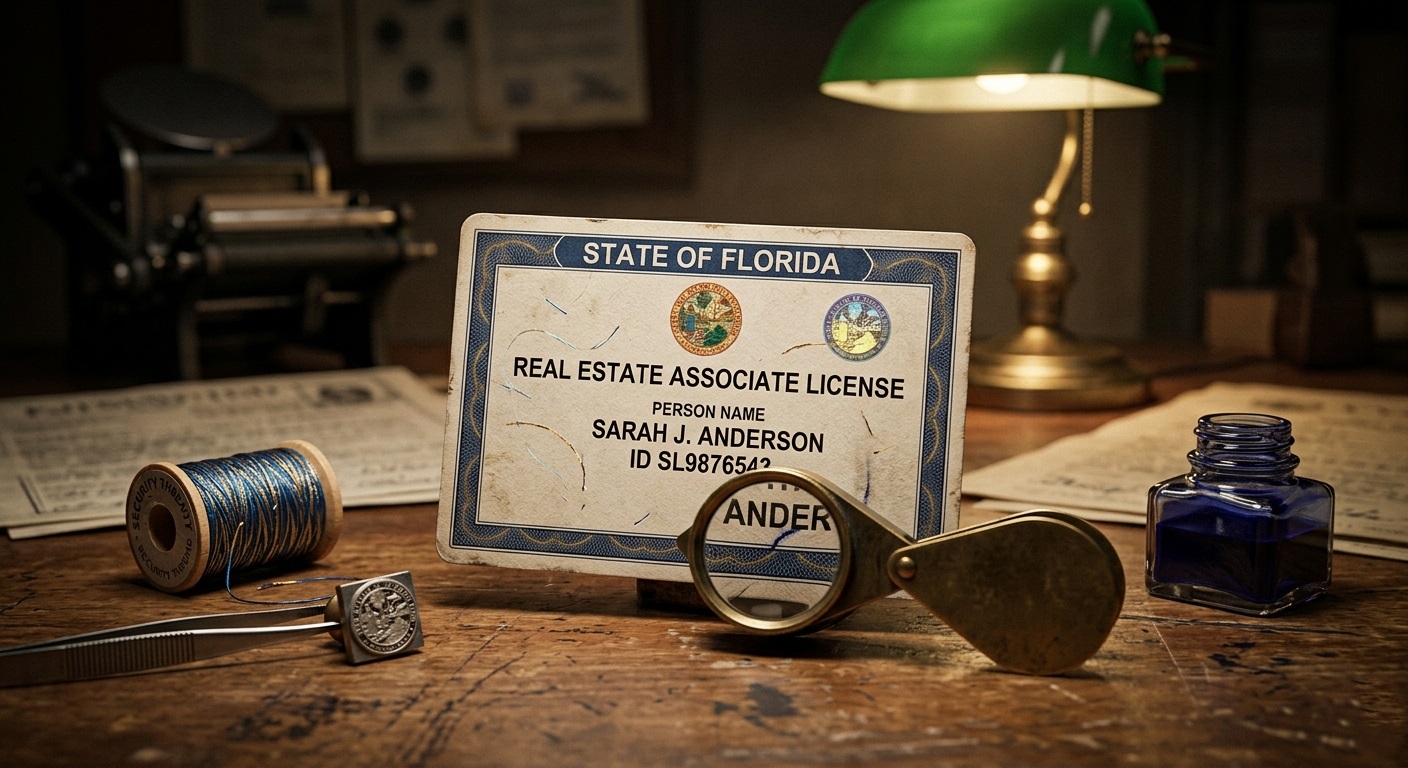
This is not your older brother’s laminated card from a shady guy downtown. The modern Fake Real Estate License is a marvel of technological engineering. It is born from the same AI revolution that powers legitimate businesses, but flipped on its head to serve a different purpose. Forget what you think you know about forgery. The methods used today are so advanced, so precise, that they are redefining the very concept of authenticity.
From Scanners to AI: The Technological Leap
The evolution of fake license creation has been nothing short of revolutionary. A few years ago, the process was clumsy. It was analog. It relied on steady hands and a good eye for detail. Today, it is a digital science. The first step is no longer about finding a similar template online. It is about high-precision scanning of a genuine license at resolutions up to 1200 DPI. This captures every microscopic detail, every flaw, every subtle variation that makes the original real.
Once the scan is complete, the real magic begins. Artificial intelligence steps in. Modern fraudsters use the same machine learning algorithms that legitimate institutions use for verification, but in reverse. The AI deconstructs the scanned image, analyzing the unique security features: the special watermarks, the microtext that is invisible to the naked eye, the UV-reactive elements, the holograms, and the security threads. It learns the DNA of the document so it can be rebuilt from scratch.
The Modern Forger’s Toolkit
Creating a Fake Real Estate License in 2026 is less like printing a flyer and more like manufacturing a microchip. The equipment required is highly specialized and the process is meticulous.
After the AI analysis, the printing begins. This is not done on a standard office printer. It requires specialized machines capable of printing with UV inks that only appear under specific light. The paper itself is a critical component; it must be identical in weight, texture, and composition to the state-issued original. For elements like holograms, special polymer materials are used, often with embossing technologies that recreate the tactile feel of raised lettering and seals.
But the visual is only half the battle. The modern fake license is a digital chameleon. It is often integrated with the holder’s biometric data. We are talking high-resolution photographs that match official standards, digital signatures that replicate the unique pressure and flow of a real one, and even fingerprints. QR codes are embedded, containing encrypted information that, when scanned, links to a fabricated but believable digital profile. This is what allows it to pass not just a visual check, but a digital one too.
A Comparison of Forgery Technologies
| Technology | Detection Difficulty | Required Equipment | Verification Success Rate |
| Analog Printing | High | Basic | 40-50% |
| High-Resolution Digital Printing | Medium | Specialized | 60-70% |
| AI-Enhanced Forgery | Low | Advanced + AI | 80-90% |
| Biometrically Integrated | Very Low | Specialized + Biometric | 90-95% |
Outsmarting the Gatekeepers
A perfect-looking document is useless if it cannot get past the systems designed to verify it. This is where the technological arms race is most intense. Modern identity verification systems often combine document scanning with facial recognition. They are designed to be a fortress. But every fortress has a weakness.
A high-quality Fake Real Estate License is created with these verification systems in mind. The holograms are positioned correctly to be read by scanners. The biometric data on the card is designed to match the digital profile it is linked to. The goal is to create a seamless, believable identity that can pass through multiple layers of digital scrutiny without raising a red flag.
The ultimate prize for any real estate professional is access to the Multiple Listing Service (MLS). This is the sacred database of all properties, and it is heavily guarded. Over 90,000 MLS agents use built-in identity verification layers. A fake license that cannot pass these checks is worthless. The best fakes are designed to exploit the very vulnerabilities in these systems, allowing the holder to walk right in and operate as if they belong.
Perhaps the toughest hurdle is the background check. This is where the digital identity becomes critical. The most effective strategy is not just to create a fake license, but to create a fake person. This involves using real data about an individual with a clean record or building a complete digital identity from scratch, complete with a history that can withstand scrutiny. It is a deep, complex deception that goes far beyond a simple piece of plastic.
Why Quality Is Non-Negotiable
In this world, you get what you pay for. A cheap, low-effort fake will be spotted in a heartbeat. The consequences can be severe, not just in terms of legal trouble, but in financial loss. The average damage from a single instance of real estate document fraud can exceed $143,000. That is a high price for cutting corners.
The best Fake Real Estate Licenses are investments. They are created using the most advanced technologies available. They incorporate AI-enhanced reproduction, biometric integration, and materials that are identical to the originals. The creators of these documents understand that verification systems are constantly evolving, so they regularly update their templates to reflect changes in state legislation and security features.
They also understand the importance of the digital footprint. A good fake license is not just the physical card. It is the entire ecosystem that supports it. It is the ability to pass a visual inspection, to scan successfully in an MLS system, to survive a basic background check, and to be accepted by professional organizations. This holistic approach is what separates the amateurs from the professionals.

The Go-To Tech Expert and Official Blogger at DrunkID
ID isn’t just a name; it’s a signature of expertise! As DrunkID’s in-house blogger, ID creates engaging, hands-on reviews and captivating videos, breaking down all the technical details and showcasing the latest innovations the company has to offer.
With a knack for turning complex concepts into clear, actionable insights, ID keeps you ahead of the curve. Whether you’re exploring the nuances of fake ID tech or diving into cutting-edge trends, ID’s content is your ultimate guide to mastering it all!
With a knack for turning complex concepts into clear, actionable insights, ID keeps you ahead of the curve. Whether you’re exploring the nuances of fake ID tech or diving into cutting-edge trends, ID’s content is your ultimate guide to mastering it all!
Latest posts by ID (see all)
- The Strategic Advantage of a Fake LLC Operating Agreement in Today’s Competitive Business Landscape - June 20, 2026
- Navigating 2026’s Tax Maze: How Fake LLC Operating Agreements Can Be Your Strategic Advantage - June 20, 2026
- Navigating Corporate Registration: Delaware vs Nevada – Leveraging Fake Articles of Incorporation - June 19, 2026