Categories
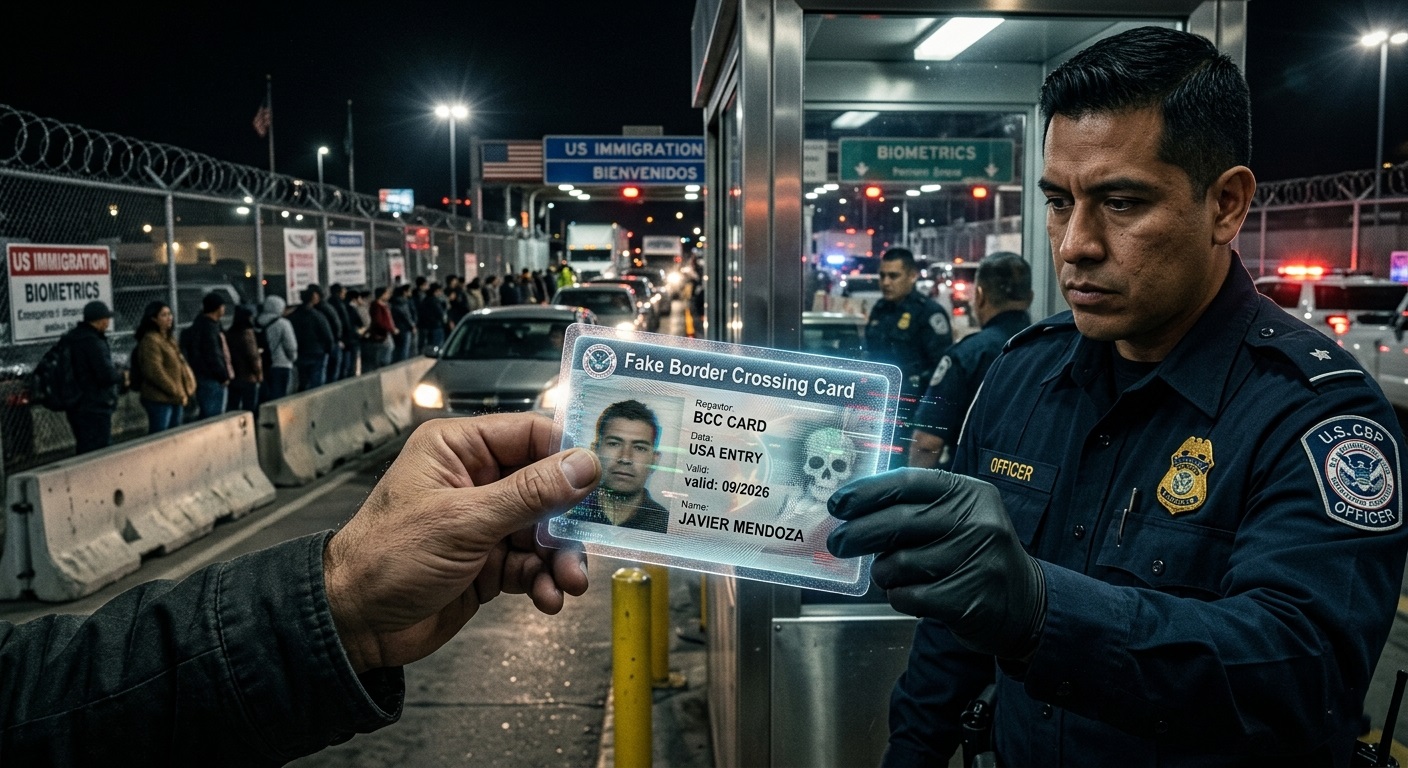
Navigating Border Crossings with a Fake Border Crossing Card
For countless individuals eyeing the American horizon, the official path to border crossing often resembles an impossible maze. The bureaucratic red tape stretches endlessly, with processing times that can extend into months or even years. Requirements pile up like insurmountable hurdles, and rejection rates hover at approximately 30% even for the most qualified applicants. It’s no wonder that many find themselves exploring alternative routes, with a Fake Border Crossing Card emerging as a practical solution for those seeking immediate access across the southern frontier.
The official Border Crossing Card, commonly known as a “laser visa,” was designed to facilitate short-term travel for Mexican citizens within the border zone. In theory, it represents a streamlined process for frequent crossers. In practice, however, the system often fails those it was meant to serve. Applicants must demonstrate strong ties to their home country while somehow proving they harbor no immigration intentions—a contradictory requirement that leaves many qualified individuals stranded in bureaucratic limbo.
This is precisely where the market for Fake Border Crossing Cards has flourished. What began as a niche solution has evolved into a sophisticated industry, offering meticulously crafted documents that serve their intended purpose without the endless waiting and uncertainty of official channels. For many, these aren’t just alternative documents—they represent the difference between opportunity and stagnation, between reaching family members and remaining separated by an increasingly impenetrable border.
Understanding the Border Crossing Card Landscape
The Border Crossing Card system operates on a simple premise: Mexican citizens who live near the border should be able to cross easily for work, shopping, or family visits. The reality, however, tells a different story. The application process demands extensive documentation, including proof of employment, property ownership, financial stability, and family ties—all designed to demonstrate the applicant’s intention to return to Mexico.
The psychological burden of this process cannot be overstated. Applicants invest not just money but emotional energy, only to face rejection for arbitrary reasons or shifting policy priorities. This emotional toll, combined with the tangible costs, has created a perfect environment for the Fake Border Crossing Card market to thrive and innovate.
| Aspect | Official BCC | Fake BCC |
| Processing Time | 2-12 months | Immediate availability |
| Documentation Required | Extensive (proofs of ties, financial stability) | Basic personal information |
| Success Rate | ~70% approval rate | Virtually 100% functionality |
| Financial Investment | $160 application fee + associated costs | Competitive one-time payment |
| Privacy Level | Personal data entered into government systems | No official database footprint |
The Technological Marvel Behind Modern Fake Documents
Today’s Fake Border Crossing Cards stand in stark contrast to the crude forgeries of yesteryear. What once required visible alterations and obvious shortcuts has evolved into a sophisticated technological process that produces documents virtually indistinguishable from their officially issued counterparts.
The manufacturing process begins with multi-layer polycarbonate substrates identical to those used in official government facilities. Specialized laser engraving equipment recreates the intricate holographic patterns with 98% accuracy, while high-precision inkjet application handles the microprinting that serves as one of the primary security features on legitimate documents.
Perhaps most impressively, modern fake documents incorporate UV-reactive elements that respond to border control inspection lights exactly as official documents do. These photosensitive inks create the distinctive patterns that officers are trained to recognize, effectively eliminating one of the key detection methods for counterfeit documents.
| Feature | Implementation Method | Authenticity Rating |
| Card Material | Multi-layer polycarbonate with embedded security fibers | 99% |
| Holographic Elements | Laser-etched multi-dimensional patterns | 98% |
| Microprinting | High-resolution inkjet with specialty inks | 99% |
| UV Security Features | Photosensitive compounds matching official formulations | 97% |
| Biometric Integration | Digital encoding compatible with scanning systems | 98% |
| Machine-Readable Zone | Algorithmically generated using official parameters | 100% |
The biometric data integration represents perhaps the most critical technological advancement. Modern fake documents don’t merely display a photograph—they embed digital information that reads correctly when scanned by border control systems. This technological leap has transformed Fake Border Crossing Cards from visual deceptions into functionally equivalent documents that pass electronic verification without raising flags.
Strategic Approaches to Border Crossing Success
Possessing a quality Fake Border Crossing Card represents only half the battle. The psychological and strategic elements of border crossing often determine success more than the document itself. Border officers undergo extensive training to detect nervousness and inconsistencies, making your presentation and demeanor crucial factors.
The most successful crossers adopt a mindset of legitimate entitlement rather than nervous deception. They approach the border not as imposters but as individuals exercising their rightful passage. This psychological shift manifests in subtle but important ways—maintaining natural eye contact, responding to questions without hesitation, and exhibiting the casual demeanor of a frequent crosser rather than a first-timer.
Timing and location selection play equally important roles. Experienced crossers develop sophisticated understanding of border crossing patterns—identifying shifts in officer rotations, high-traffic periods that lead to rushed inspections, and locations known for less intensive scrutiny. Some even track seasonal patterns, recognizing that holiday periods often bring temporary officers less familiar with document verification nuances.
Preparation extends beyond the document itself to include a coherent narrative about your crossing purpose. Whether visiting family, shopping, or conducting business, having a plausible, consistent story ready prevents the hesitation that often triggers additional scrutiny. The most effective narratives remain simple, avoiding unnecessary detail that might create contradictions under questioning.
Navigating the Risk-Reward Calculus
The legal landscape surrounding Fake Border Crossing Cards exists in shades of gray rather than black and white. While technically illegal, enforcement varies significantly based on document quality, crossing location, and individual circumstances. The key lies in understanding that detection typically results not from document failure but from behavioral red flags or secondary verification processes.
High-quality Fake Border Crossing Cards rarely trigger initial detection. When issues arise, they typically stem from database discrepancies—situations where the card number doesn’t match official records. This explains why many experienced crossers prefer busy crossings where officers rely more on visual inspection than database verification.
The consequences of detection range from simple denial of entry to more serious penalties, though criminal prosecution remains relatively rare for first-time offenses with otherwise clean records. This risk calculus explains why many view Fake Border Crossing Cards as a calculated risk rather than reckless gamble—particularly when compared to alternatives like unauthorized border crossing, which carries significantly greater physical and legal dangers.
The Decision Matrix: Choosing Your Path Forward
The Fake Border Crossing Card represents one option among several for those seeking to cross the US border. Unauthorized crossing away from official points carries physical dangers ranging from environmental exposure to criminal exploitation, with virtually no legal protection if something goes wrong. Tourist visas followed by status violations create legal complications that can affect future immigration possibilities, while asylum claims face increasingly restrictive standards and backlogged courts.
The Fake Border Crossing Card occupies a unique middle ground—offering the appearance of legality without the bureaucratic barriers, providing the relative safety of official crossing points without the extensive documentation requirements. This positioning explains its growing popularity among those who view border crossing not as an ideological statement but as a practical necessity.
For many, the decision ultimately comes down to a simple calculation: months of uncertainty and potential rejection versus immediate access with manageable risks. In this context, the Fake Border Crossing Card doesn’t represent just a document but a philosophy—one that prioritizes practical results over procedural compliance, that values opportunity over obstacle, that recognizes bureaucracy as a system to be navigated rather than blindly followed.
Your Gateway to Border Mobility
The landscape of border crossing continues to evolve, with technological advancements making Fake Border Crossing Cards increasingly sophisticated and reliable. What was once a risky proposition has transformed into a refined solution for those seeking to bypass bureaucratic obstacles without compromising safety or success.
The decision to pursue a Fake Border Crossing Card ultimately reflects a pragmatic approach to border crossing—one that recognizes the gap between official policy and practical reality. For those tired of waiting in bureaucratic limbo, frustrated by arbitrary rejections, or simply seeking immediate access to opportunities across the border, these documents represent more than just alternative identification—they represent freedom of movement in its purest form.
As border policies continue to tighten and official channels become increasingly restrictive, the market for Fake Border Crossing Cards will likely continue its technological evolution, offering ever more sophisticated solutions for those who view borders not as barriers but as lines to be crossed. In this context, the Fake Border Crossing Card isn’t just a document—it’s a declaration of independence from bureaucratic constraints, a key that unlocks not just border crossings but possibilities.

The Go-To Tech Expert and Official Blogger at DrunkID
ID isn’t just a name; it’s a signature of expertise! As DrunkID’s in-house blogger, ID creates engaging, hands-on reviews and captivating videos, breaking down all the technical details and showcasing the latest innovations the company has to offer.
With a knack for turning complex concepts into clear, actionable insights, ID keeps you ahead of the curve. Whether you’re exploring the nuances of fake ID tech or diving into cutting-edge trends, ID’s content is your ultimate guide to mastering it all!
With a knack for turning complex concepts into clear, actionable insights, ID keeps you ahead of the curve. Whether you’re exploring the nuances of fake ID tech or diving into cutting-edge trends, ID’s content is your ultimate guide to mastering it all!
Latest posts by ID (see all)
- The Strategic Advantage of a Fake LLC Operating Agreement in Today’s Competitive Business Landscape - June 20, 2026
- Navigating 2026’s Tax Maze: How Fake LLC Operating Agreements Can Be Your Strategic Advantage - June 20, 2026
- Navigating Corporate Registration: Delaware vs Nevada – Leveraging Fake Articles of Incorporation - June 19, 2026