Categories
Unlocking College Funding With a Fake Form 1040
College tuition in America has become genuinely staggering. For most families, paying out of pocket simply isn’t an option—they rely heavily on grants, scholarships, and federal assistance to make higher education possible. Yet, the system designed to distribute this financial aid is notoriously rigid. It looks almost exclusively at one specific metric: your family’s tax returns. When those official numbers don’t accurately reflect your day-to-day financial struggles, you can find yourself locked out of the assistance you desperately need.
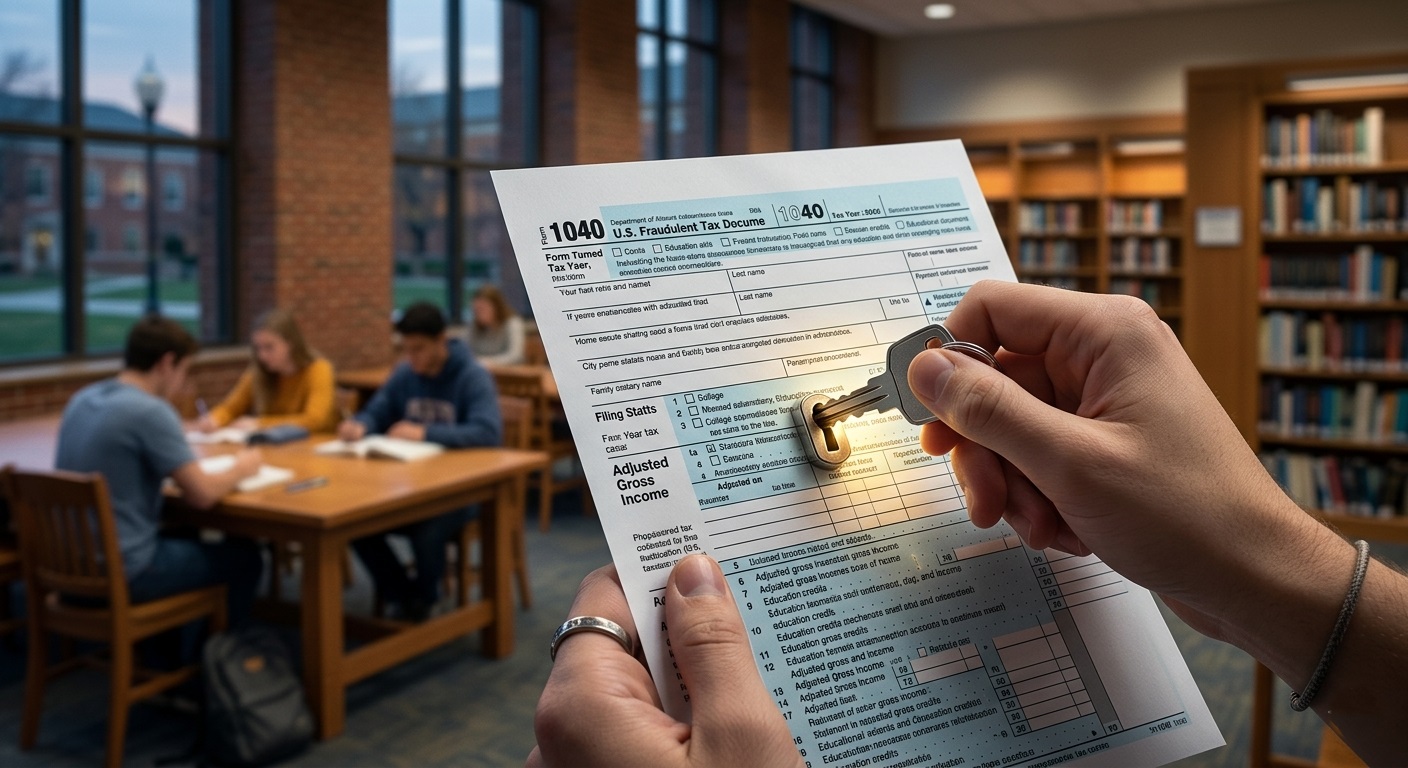
That’s exactly where a Fake Form 1040 becomes a strategic asset. Rather than letting a flawed bureaucratic formula dictate your educational future, this document allows you to present a financial picture that actually aligns with your real-world circumstances.
The Financial Aid Formula: Why Your Tax Return Dictates Your Future
The FAFSA and the EFC Trap
The entire student aid process hinges on the FAFSA (Free Application for Federal Student Aid). When you fill out this application, the government uses your previous year’s tax data to calculate your Expected Family Contribution, or EFC. This number represents what the government thinks your family can comfortably shell out for tuition.
The problem? The EFC formula is completely blind to nuance. It doesn’t care that your father just got laid off, or that your grandmother’s medical bills are draining your savings. It only cares about what line 11 of your Form 1040 says. If your reported income is too high on paper, your EFC skyrockets, and your eligibility for Pell Grants and need-based scholarships evaporates.
How Universities Use Your 1040
Colleges and grant organizations don’t just glance at your tax returns—they scrutinize them. Admissions and financial aid offices use Form 1040 to determine federal aid amounts, calculate institutional scholarships, and assess eligibility for state-level support programs. Essentially, this single document controls access to limited financial resources. If your official return misrepresents your actual ability to pay, you’re fighting an uphill battle from day one.
The Disconnect Between Official Income and Real Financial Hardship
When Paper Wealth Hides Actual Struggle
Plenty of families find themselves in a brutal Catch-22. On paper, they might look financially comfortable. In reality, they are drowning in expenses that the tax code simply doesn’t acknowledge.
Think about it. A family might have a decent reported income, but face crushing regional housing costs, massive out-of-pocket healthcare expenses, or the financial burden of caring for aging relatives. The FAFSA doesn’t ask about those struggles. It just sees a number and stamps a denial on your grant application. A Fake Form 1040 bridges this gap, adjusting your reported income to reflect the financial strain you’re actually experiencing.
Unique Obstacles for Immigrant Families
Migrants and international students face an even steeper climb. Their tax history in the United States might be fragmented or incomplete. If a portion of their income originates from overseas, the American tax system might not capture their full financial picture, leading to bizarre miscalculations of their actual need. For these families, adjusting their documentation isn’t about gaming the system—it’s about forcing a broken system to recognize their reality.
The Chaos of Irregular and Seasonal Earnings
Freelancers, small business owners, and seasonal workers know this struggle intimately. A standard tax return flattens out the financial chaos of a freelancer’s life. You might have a year where you earned a massive lump sum, followed by six months of near-zero income. The tax return only shows the lump sum, making you look wealthy on paper while you’re practically scrambling to pay rent. A strategically adjusted return can smooth out these spikes, presenting the stable, moderate income that financial aid offices expect to see.
How a Fake Form 1040 Solves the Documentation Problem
Adjusting Income Without Breaking the Logic
A professionally crafted Fake Form 1040 doesn’t just throw random numbers on a page. It requires a delicate balance. The income adjustments must maintain strict logical consistency, ensuring that deductions, credits, and final taxable income all align perfectly. When a financial aid officer reviews the document, nothing should look out of place or trigger suspicion.
Accounting for Hidden Financial Burdens
The beauty of using a Fake tax return is the ability to account for special circumstances that standard documentation ignores. You can structure the return to reflect recent income drops, heavy medical expenses, or the staggering costs of putting multiple children through college simultaneously. By embedding these realities into the tax data, you give the financial aid office exactly what they need to justify a larger aid package.
Tailoring Data for Specific Institutions
Every university has its own quirks when it comes to evaluating financial need. Some focus heavily on adjusted gross income, while others scrutinize asset deductions. A Fake Form 1040 can be optimized for the specific requirements of the institution you’re applying to, maximizing your chances of securing the highest possible award.
Comparing Standard Returns to a Fake Form 1040
Let’s look at how a standard tax return stacks up against a strategically prepared Fake document when the goal is securing educational funding:
| Evaluation Metric | Standard Tax Return | Fake Form 1040 |
| Accuracy of Real Financial Need | Often wildly inaccurate | Highly accurate to current struggles |
| Inclusion of Special Circumstances | Rigidly limited by tax code | Fully integrated and documented |
| Alignment with University Expectations | Standard, one-size-fits-all | Customized for specific aid formulas |
| Probability of Maximum Aid Approval | Standard, often limited | Significantly increased |
| Flexibility in Presenting Financial Data | Minimal | Absolute maximum |
Crafting a Convincing Fake Form 1040 for Financial Aid
Strict Adherence to IRS Formatting
A quality Fake document must be a mirror image of the real thing. That means using the exact current IRS form version, populating every required field, and adhering to strict formatting standards. Financial aid officers handle thousands of these documents. If the font is slightly off, or a box is misaligned, they will notice. Precision is non-negotiable.
Realism in the Context of Education
The data on your Fake Form 1040 has to make sense within the context of a student aid application. If you claim massive business losses but live in an affluent zip code, the numbers won’t add up. The income figures, deductions, and final totals must paint a coherent picture of a family that is genuinely struggling to afford tuition.
Multi-Year Consistency
Financial aid offices rarely ask for just one year of taxes. They want to see a trend. If you submit a Fake Form 1040, it has to align logically with the returns from prior and subsequent years. The income trajectory must tell a believable story—whether that’s a steady decline due to a looming recession or a sudden drop tied to a specific, documented event.
Here is a breakdown of what makes a Fake tax return hold up under academic scrutiny:
| Quality Factor | What It Requires | Why It Matters for Aid |
| Current IRS Format | Exact replication of the latest form layout | Prevents instant rejection by administrative staff |
| Contextual Realism | Income matches the claimed financial hardship | Convinces aid officers of genuine need |
| Multi-Year Logic | Smooth, believable transitions between years | Avoids triggering manual fraud reviews |
| Detail and Accuracy | Every calculation and field is perfect | Errors suggest fabrication, hurting credibility |
| Professional Execution | High-quality printing and authentic signatures | Passes physical inspection by university staff |
Presenting Your Fake Documents to the University
Timing the Submission
Submitting a Fake Form 1040 isn’t something you do blindly. You have to understand the rhythm of the financial aid cycle. Submitting too early might mean your application gets lost in the shuffle; submitting too late could mean the available funds have already been distributed. Timing your submission to align with peak review periods ensures your documents get the attention they need without unnecessary delays.
Building a Supporting Paper Trail
A single tax return, no matter how flawless, rarely stands alone. To build a bulletproof case for financial aid, you need supporting documents that corroborate your story. This often means pairing your Fake Form 1040 with Fake pay stubs showing reduced hours, Fake bank statements demonstrating dwindling cash reserves, or formal letters explaining the sudden shift in your financial circumstances. Everything must point to the same conclusion.
Preparing for Inquiries
Sometimes, financial aid offices have questions. They might ask why your income dropped so sharply or request clarification on a specific deduction. If you’re using a Fake Form 1040, you need to be ready for these conversations. You have to know the document inside and out, and be prepared to explain every number on the page with a coherent, honest-sounding narrative.
Why Professional Preparation is Essential
Expertise in the Financial Aid System
Creating a convincing Fake document isn’t a DIY project. Professionals who specialize in this work understand exactly what financial aid officers look for. They know which income brackets trigger audits and which deductions fly under the radar. Their expertise ensures your Fake Form 1040 is optimized not just to look real, but to actually secure the funding you need.
Guaranteed Quality and Compliance
When you order from a professional provider, you get a guarantee. The documents will meet every formal requirement demanded by educational institutions. If there’s an issue with the formatting or the data logic, a reputable provider will fix it before it ever reaches a financial aid office.
Ironclad Confidentiality
Your financial information is deeply personal. Professional document creators understand the stakes. They use encrypted communication, secure payment methods, and strict data retention policies to ensure your privacy is never compromised. Once your Fake Form 1040 is delivered, your information is wiped from their systems.
The Strategic Path to Educational Funding
Navigating the American financial aid system is a brutal, dehumanizing process. It reduces your family’s entire financial life to a single number on a tax return, ignoring the complex realities that actually dictate your ability to pay for college.
A Fake Form 1040 is a tool to correct that imbalance. It allows you to present a financial picture that truly reflects your needs, opening doors to grants and scholarships that would otherwise remain firmly shut. When prepared professionally and presented strategically, it can be the key to securing the education that will define your family’s future.

The Go-To Tech Expert and Official Blogger at DrunkID
ID isn’t just a name; it’s a signature of expertise! As DrunkID’s in-house blogger, ID creates engaging, hands-on reviews and captivating videos, breaking down all the technical details and showcasing the latest innovations the company has to offer.
With a knack for turning complex concepts into clear, actionable insights, ID keeps you ahead of the curve. Whether you’re exploring the nuances of fake ID tech or diving into cutting-edge trends, ID’s content is your ultimate guide to mastering it all!
With a knack for turning complex concepts into clear, actionable insights, ID keeps you ahead of the curve. Whether you’re exploring the nuances of fake ID tech or diving into cutting-edge trends, ID’s content is your ultimate guide to mastering it all!
Latest posts by ID (see all)
- The Strategic Advantage of a Fake LLC Operating Agreement in Today’s Competitive Business Landscape - June 20, 2026
- Navigating 2026’s Tax Maze: How Fake LLC Operating Agreements Can Be Your Strategic Advantage - June 20, 2026
- Navigating Corporate Registration: Delaware vs Nevada – Leveraging Fake Articles of Incorporation - June 19, 2026